Effortlessly Navigate Canadian Smart Meter Standards: CSA, IEEE, IEC, and MC
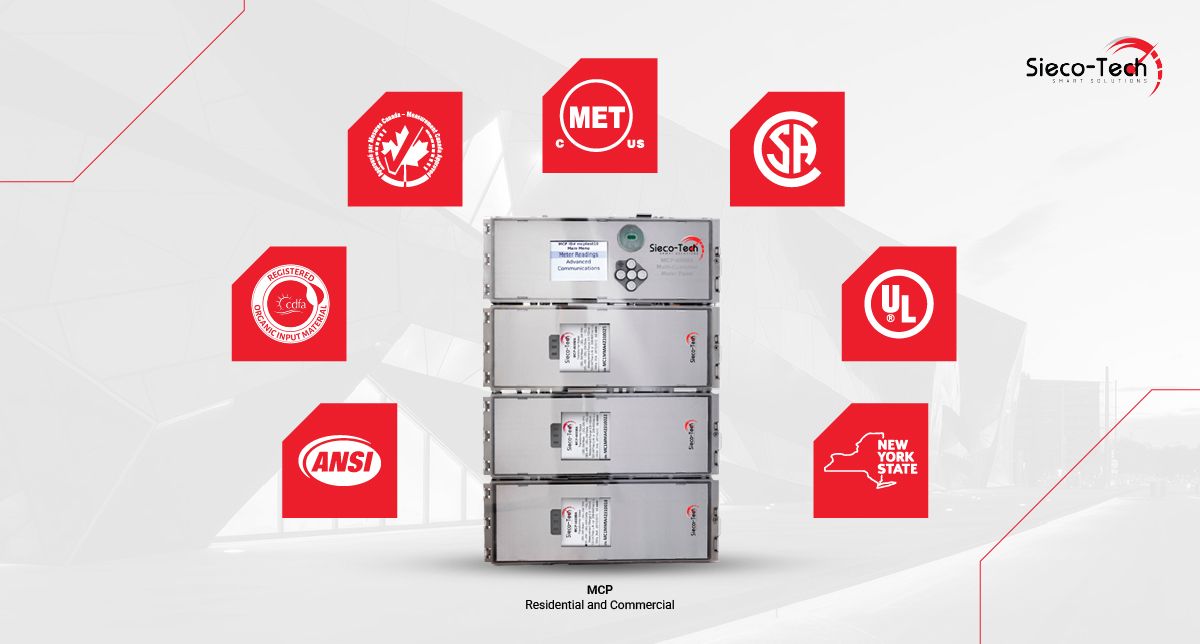
Multiple authorities shape the landscape of Canadian smart meter standards and sub-metering compliance. These bodies require multi-tenant utility meter systems to meet both product safety expectations and technical regulations.
Understanding these rules and how they influence meter design, documentation, installation, and long-term operations is important when investing in a sub-metering system.
Regulatory Landscape of Canadian Smart Meter Standards
In revenue-grade metering, Canadian providers are required to use metering technology that aligns with a framework of standards, including:
CSA Smart Meters Standards
The Canadian Standards Association develops Canadian safety standards and runs certification programs that verify electrical products meet defined construction and safety requirements for installation and use.
IEC Standards and Sub-Metering
The International Electrotechnical Commission (IEC) publishes international electrotechnical standards that guide device performance and testing expectations, including metering, environmental behavior, and electromagnetic compatibility.
IEEE and Multi-Customer Meter
The Institute of Electrical and Electronics Engineers (IEEE) creates engineering standards used widely in North America, including technical standards that influence metering performance, communications, and interoperability.
Measurement Canada Smart Energy Meters
Measurement Canada is the federal regulator for legal metrology that governs whether meters can be used for billing, including type approval, verification and sealing, and compliance processes for metering systems used in revenue applications.
Distinct Roles For Each Entity
While compliance standards by these bodies overlap in many respects, each is applicable to different contexts.
A common point of confusion is assuming one of these approvals means a meter is authorized for any application. For example, a meter can be CSA approved for safety and still be unsuitable for billing if it has not been approved by Measurement Canada.
Smart Meter Product Safety
CSA focuses on product safety. In simple terms, CSA approval indicates the meter is safe to operate in an electrical environment.
Technical Standards for Smart Metering
IEC and IEEE provide technical standards that influence how meters are built and how they are expected to perform, including measurement behavior and system-level interoperability.
Measurement Canada (MC)
MC determines installation requirements, behaviors, performance requirements, and capabilities required for a meter to be used for revenue purposes.
Operators exploring metering products should confirm that the unit model and intended application align with the relevant residential or commercial energy billing standards before ordering or installing the equipment
If you need to consult experts on smart meter specifications and certifications for your province or municipality, contact Sieco-Tech for a courtesy review.
Measurement Canada Smart Meter Standards
Measurement Canada requirements are generally triggered when meter data is used for billing. In those cases, compliance is not limited to just choosing an approved meter model, but involves a sequence of approvals and field processes, plus ongoing obligations over the life of the system.
To note, Measurement Canada sub-metering regulations currently apply exclusively to revenue-grade electrical and gas smart meters.
Provincial and municipal authorities, such as the Ontario Energy Board, can have additional jurisdiction to determine approved sub-metering billing practices and fees.
Approval, verification, and inspection are ongoing obligations
Measurement Canada's electrical multi-customer metering system (MCMS) compliance standards require three broad layers of approvals.
Type Approval: The meter model is lab-tested and evaluated to confirm it meets load and tolerance requirements for the intended application. This is the step at which a model becomes eligible for billing.
Initial verification and sealing (S-E-02): Individual meter modules are tested for accuracy and sealed before being placed into service.
Field inspection after installation (S-E-04): Multi-customer energy meters require a field inspection to confirm correct installation.
Implications for Long-Term Operations
Measurement Canada's obligations for smart energy meter systems continue after commissioning.
Re-verification cycles
The S-E-02 seal requires periodic re-verification, which involves removing meters from service, testing or exchanging them, resealing, and updating records. These terms can range from six to 10 years, depending on a model’s credentials.
Meter Exchanges
When meters are exchanged, whether for an audit, an error, or re-verification, it can be a substantial undertaking. It requires coordinating site access and sending an electrician to the site for licensed installation. These costs compound into high hourly fees when managing a full portfolio of meters across multiple sites.
Breaking S-E-04 Seals
Measurement Canada installation seals (S-E-04) can be disturbed when smart meters have to be accessed. This requires an additional MS authorized service provider to re-inspect any new meter when it is exchanged.
Documentation & System Continuity
Lifecycle compliance depends on maintaining accurate records for each meter point. That includes tracking verification dates, seal status, configuration changes, and any maintenance work.
For building stakeholders, the practical takeaway is that revenue-grade sub-metering should be scoped as a long-term operational system, and metering purchases should aim at keeping that work efficient.
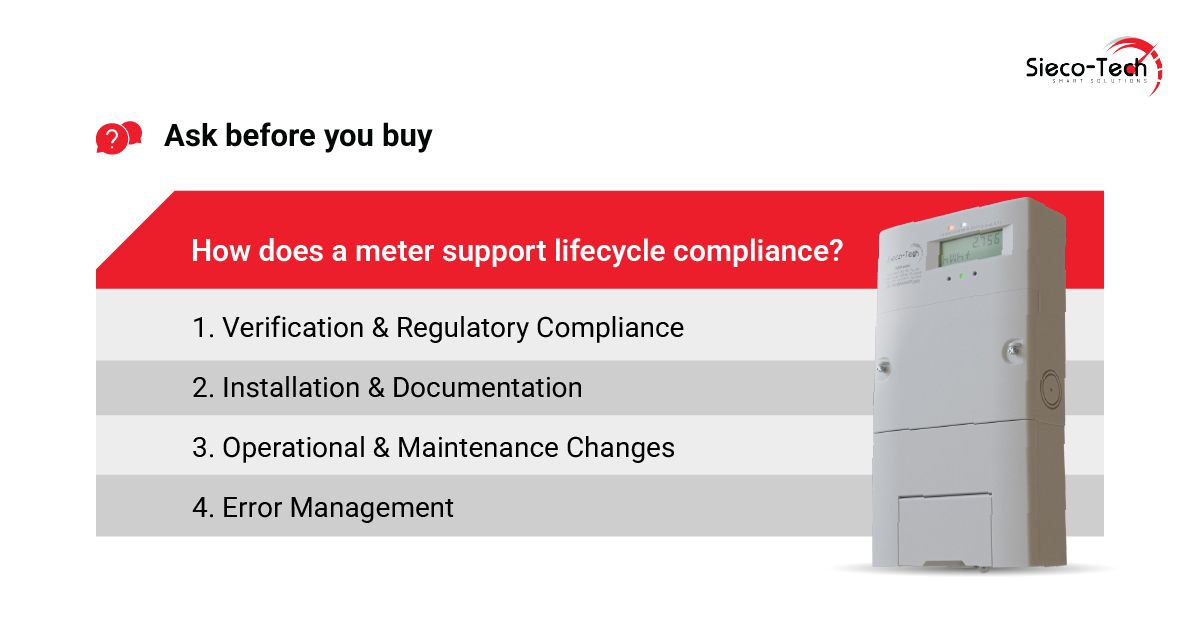
Planning and Procurement: Validate Before You Buy or Deploy
Once the Measurement Canada lifecycle is understood, the next practical step is planning.
The goal is to confirm the meter model, approval scope, system design, and operations plan align before equipment is ever ordered or installed.
Match the Intended Use Case
A meter can be technically capable of multiple applications, but Measurement Canada approval determines what it can be used for in billing contexts, whether it is residential, commercial, or mixed use.
This decision should also aim at determining whether a property will require a multi-point metering system or single-point units, new construction, retrofit project, and which communication protocols are eligible for your buildings.
Lifecycle Management Costs
Revenue metering creates repeatable work across the seal period. The practical question for operators and owners is how much effort will be required to maintain compliance over time.
Will S-E-02 re-verification on the metering system be required on a six- or 10-year cycle?
Serviceability or Ease-of-Service: Can meters be removed or replaced without unnecessary disruption to electrical components? This can mean the difference between requiring a certified electrician on-site or having a technician team make exchanges.
Multi-Seal Design: How verification seals are applied on a meter design and what maintenance actions are likely to disturb them.
Documentation + Controls : How involved is ensuring meter points, CT pairings, and configuration settings are traceable over time?
Future-Proofing
Long deployment cycles mean meters can be subject to changes in standards over time, including regulatory updates from Measurement Canada.
Operators should consider what a metering system will require if security patching, communications updates, or new system integrations are ever needed.
What can be updated remotely? What will have to happen in the field? What seals are breached in the process?
Streamline Canadian Smart Meter Standards, with Sieco-Tech
Sieco-Tech makes Canadian smart meter standards easy to manage by treating compliance as a system outcome.
Our energy metering platforms are designed by veteran industry engineers to fully support lifecycle alignment, from product-level specifications through long-term operations in the field.
Sieco-Tech smart electric meters deliver leading performance and reliability for multi-customer billing; a range of products and models to support residential, commercial, and mixed-use projects; service-first design that streamlines S-E-04 verification and S-E-02 re-verification; and future-proof features to lower lifecycle management and compliance costs
Start exploring our meters, or schedule a consultation with our team.